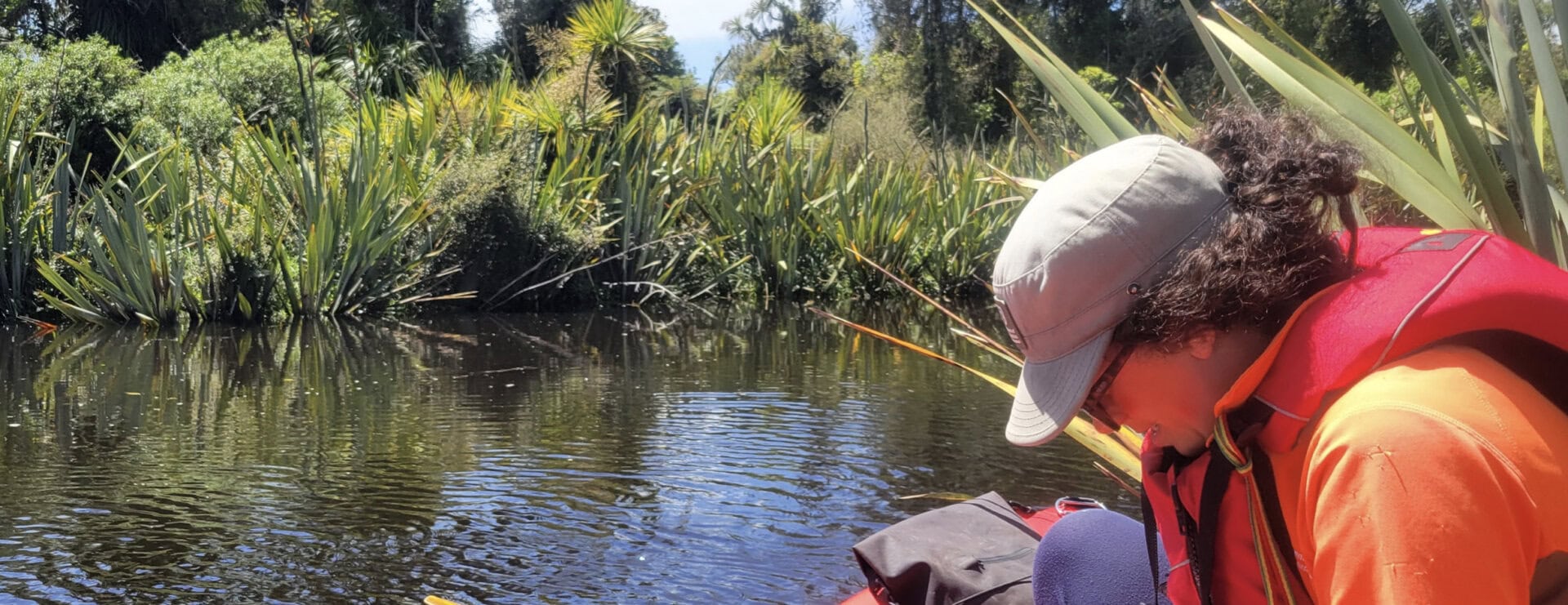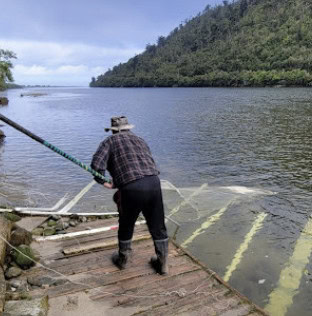
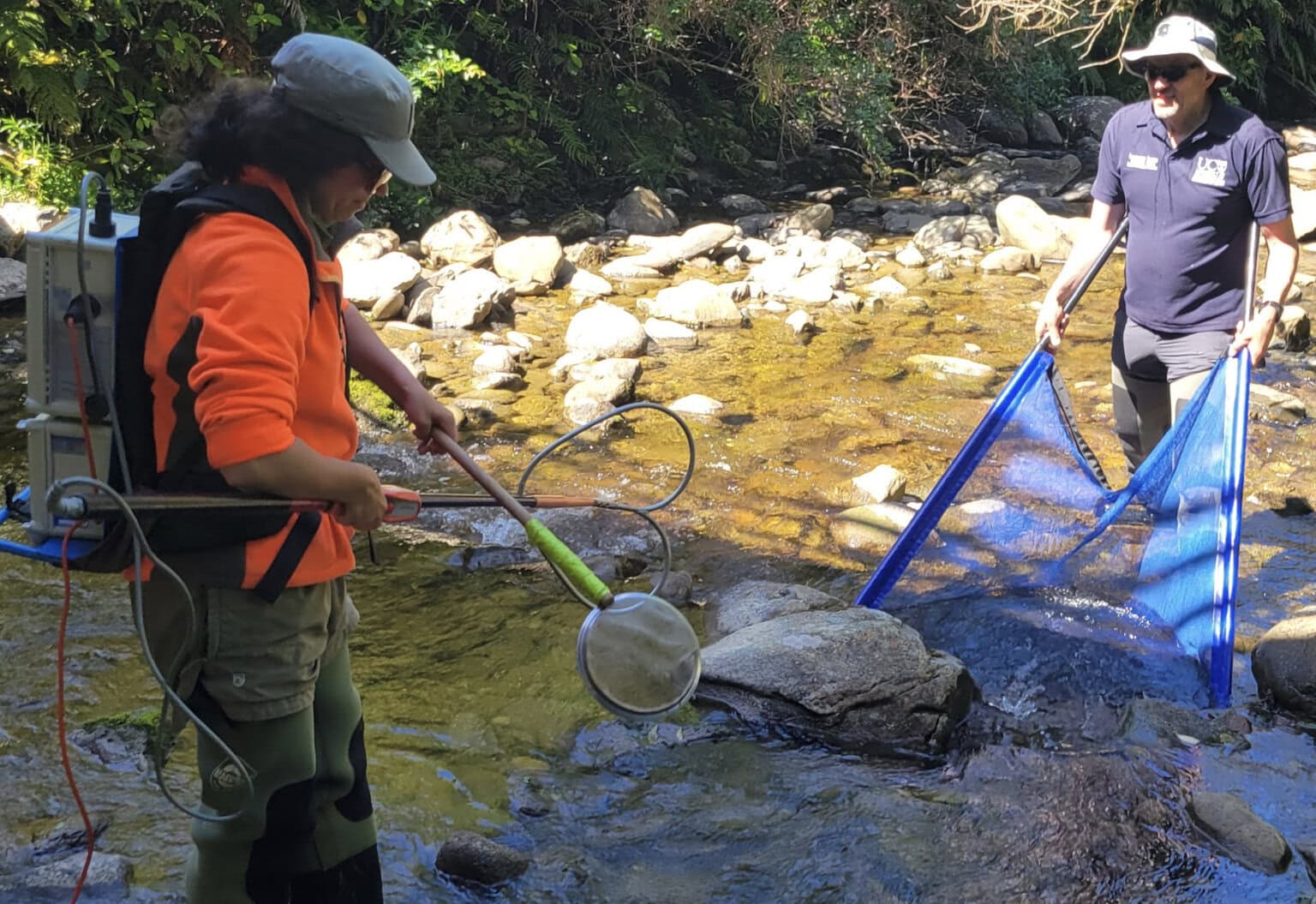
Recently, our team had the incredible opportunity to support the Department of Conservation’s West Coast freshwater ranger, Suze Harris, on a series of monitoring projects along the stunning West Coast. From late-night spotlighting to eDNA sampling, the experience was packed with learning, adventure, and inspiring insights into freshwater ecosystems.
Highlights of the Trip
eDNA Sampling at Mokihinui
We joined Suze and Bryan, a fifth-generation West Coaster, to collect eDNA samples in Whitebait buckets. The goal? To identify which galaxiid species are moving upstream at different times of the year. Suze coordinates this effort monthly across the coast, and it was fascinating to see science in action up close.
Spotlighting Shortjaw Kokopu
One of the most memorable experiences was late-night spotlighting until 2am! Suze has been monitoring a Shortjaw Kokopu population in a stream near Hokitika for almost five years. On our visit, we were lucky enough to spot 39 Shortjaw Kokopu in a single night! This was the first time many of us had ever seen them, so it was a real privilege to be there.
Building a Galaxiid Identification Chart
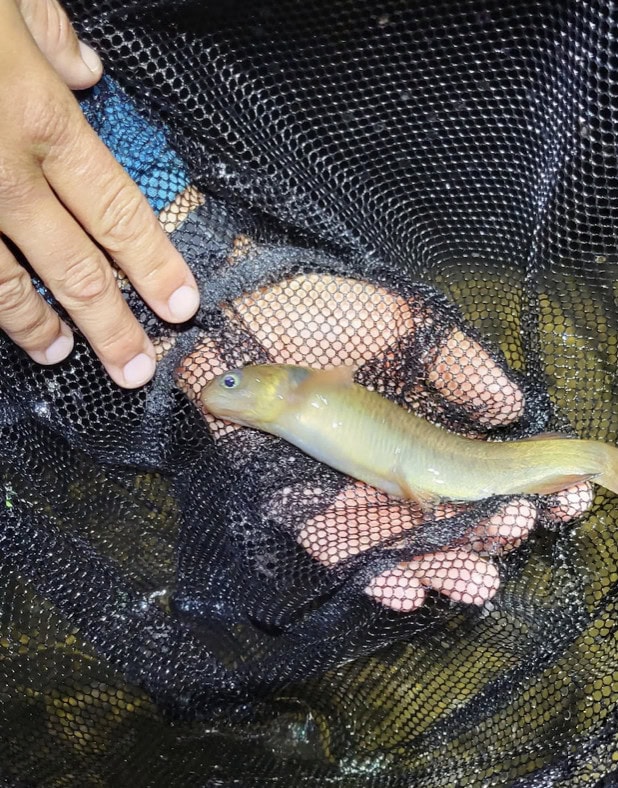
We helped collect galaxiid species at various stages of their life cycle for a new identification chart organized by Professor Angus McIntosh from the University of Canterbury. The fish were collected using electric fishing, spotlighting, and fyke netting, and will be photographed for research and educational purposes.
Sharing Skills and Knowledge
Our team also shared skills with the DoC team, teaching how to complete a saltwater wedge survey and use the National Inanga Spawning Hub App. We even carried out a survey on a river close to a whitebaiting spot…. a beautiful, serene location among the 22 such sites along the West Coast and Fiordland, many initially studied by freshwater pioneer Bob McDowall.
Exploring Wadeson Island
We explored ideas for the Wadeson Island project, a large-scale initiative to enhance īnanga habitat on the Hokitika River. It was exciting to discuss how our teams can collaborate to support īnanga populations into the future. Learn more about Wadeson Island here.
Lowlights: Environmental Challenges
Not every site was thriving. Granity Creek, located just below the Stockton Mine, showed extremely low pH levels and high conductivity. Macroinvertebrates were absent, and historical fish counts had been very low. We conducted an eDNA survey here, which should provide crucial insight into the creek’s current biodiversity…results we’re eagerly awaiting.
Overall, this trip was an unforgettable mix of fieldwork, skill-sharing, and deep dives into freshwater ecology. From spotting elusive native fish to collaborating on habitat restoration projects, our team gained experiences we’ll be bringing back to our work and sharing with the wider community.