
This summer, Tasman Bay Guardians and the Motueka Catchment Collective (MCC) expanded stream temperature monitoring across the Motueka catchment through the Wai Connection project, helping community groups gather vital information about the health of their local waterways.
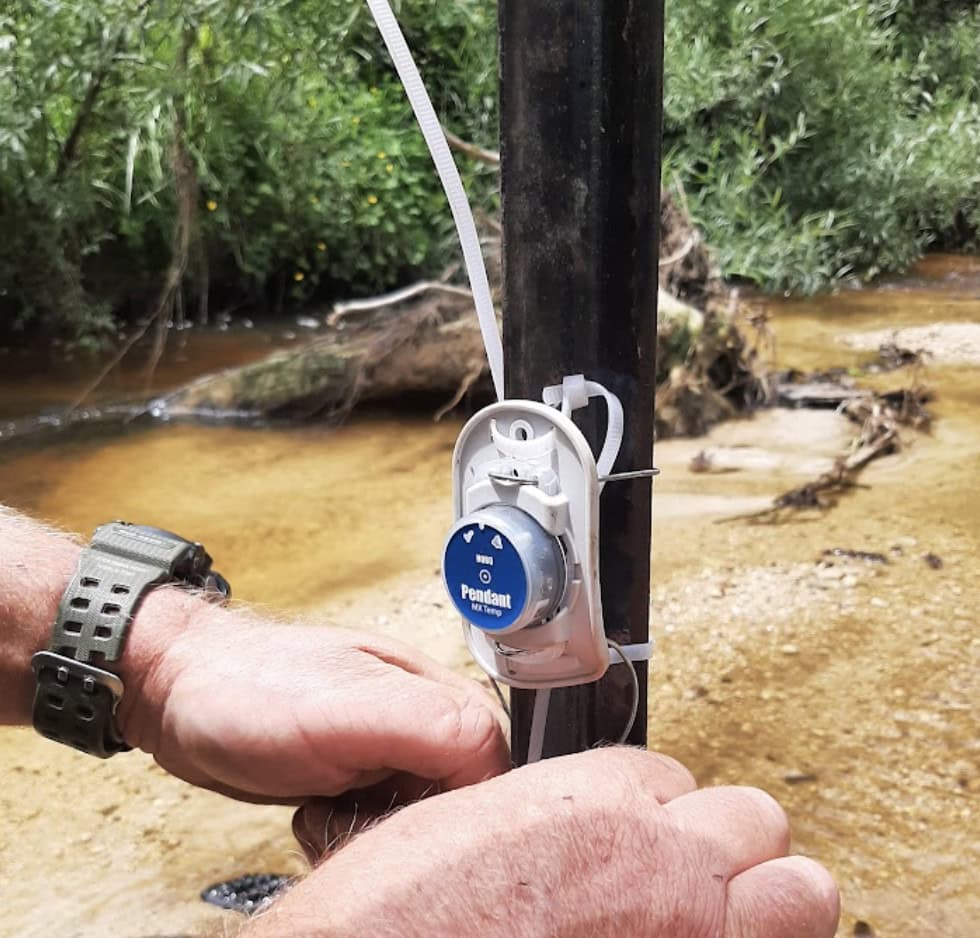
In December 2025, the Wai Connection team installed nine HOBO temperature loggers (funded by MCC) in tributaries throughout the catchment. The loggers remained in place through the peak summer months before being retrieved at the start of April 2026.
The programme was designed to support nine of the eleven SHMAK monitoring groups coordinated through the Motueka Catchment Collective, providing quality scientific data to strengthen and complement the monitoring already being carried out by local communities.The sites monitored this season included:
- Glenrae Stream
- Stanley Brook
- Dove River
- Baton River
- Greenhill Stream
- Orinoco Stream
- Waiwhero Stream
- Rocky River
- Brooklyn Stream
This builds on last year’s pilot monitoring programme, where four tributaries — Stanley Brook, Dove River, Waiwhero Stream, and Brooklyn Stream — were monitored for summer water temperatures.
Why Monitor Water Temperature?
While stream temperatures might seem like a small detail, they play a major role in freshwater ecosystem health. The HOBO loggers recorded water temperatures every hour, day and night, between December and March, providing a detailed picture of how streams respond during the hottest months of the year.
The data helps provide robust scientific information to back up the work being undertaken by community-based monitoring groups and gives sub-catchment communities valuable insights as they plan freshwater and riparian restoration projects.
High water temperatures have been identified by Tasman District Council as an ongoing concern in the Motueka awa and across the wider Tasman region. By monitoring tributaries throughout the catchment, Tasman Bay Guardians through the Wai Connection project, in collaboration with MCC hope to build a better understanding of how widespread the issue is and where restoration efforts may have the greatest impact. As water temperatures rise, freshwater ecosystems come under increasing stress.
Warmer water holds less oxygen than cooler water, making it harder for fish, invertebrates, and other aquatic species to survive. Water at 0°C can hold nearly twice as much dissolved oxygen as water at 30°C. Many freshwater species thrive in temperatures between 10°C and 15°C, but prolonged exposure to warmer conditions can cause stress, reduce habitat suitability, and in extreme cases, lead to death if species cannot move to cooler areas (such as deep pools, or shaded regions).
Higher temperatures can also increase algal growth and contribute to nuisance algae blooms, further impacting stream health and water quality. For species such as inanga and many native freshwater invertebrates, maintaining cool, shaded waterways is critical.
Early Signs Point to Catchment-Wide Challenges
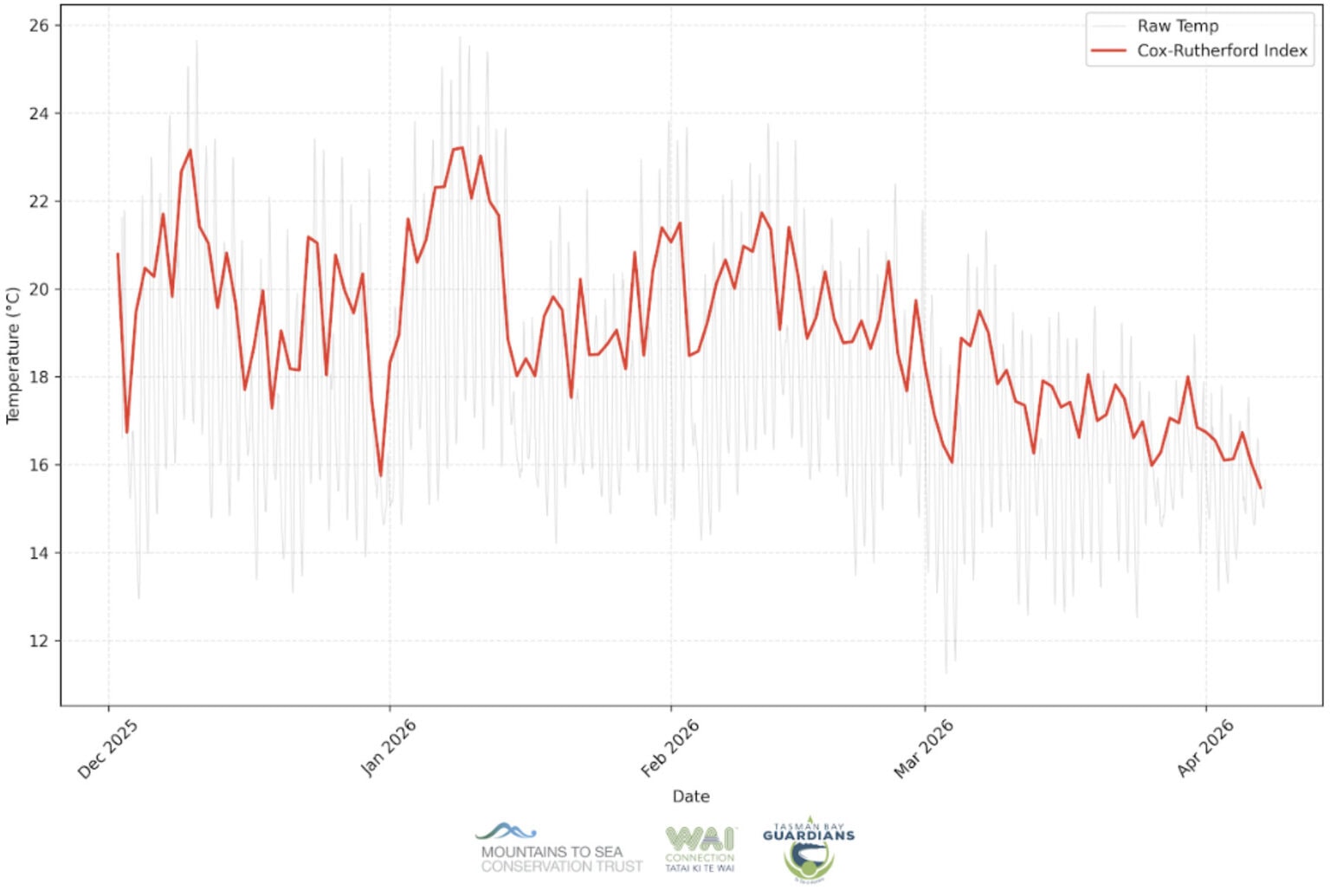
Although this season’s data has only just been retrieved and is still being processed, early indications suggest elevated summer temperatures remain a widespread issue throughout the catchment.
Last year’s monitoring showed that all monitored tributaries exceeded healthy temperature ranges during summer. While this summer appeared slightly cooler and less dry than the previous year, the data analysis will confirm whether conditions improved.
The information collected will now be processed into graphs using the Cox-Rutherford Index before being shared with the SHMAK groups and wider community.The long-term goal of this programme is not simply to collect data — it is to help communities make informed decisions about freshwater restoration.
Temperature data can help identify streams most at risk, highlight areas where riparian planting and shading could reduce heat stress, and support catchment-wide planning efforts, and directly inform the community-led goals of the Motueka Catchment Collective’s Community Catchment Plan — which sets out a long-term vision for healthy land, healthy rivers and thriving freshwater ecosystems across the catchment. Tasman Bay Guardians also hopes the information will strengthen education initiatives and provide useful insights for partner agencies and organisations working across the region.
In collaboration with MCC the data will be shared publicly with SHMAK groups, sub-catchment communities, and the wider Motueka catchment depending on the group.
Challenges Along the Way
Like many field-based monitoring programmes, the season was not without its challenges.
At one site, the stream channel shifted during summer, leaving the logger stranded out of the water. Three other sites experienced heavy sediment build-up, likely linked to ongoing movement of sand and silt following last year’s flooding events — something that had not previously been an issue for the programme.
Despite these setbacks, the monitoring effort continues to prove its value. The programme is already providing important information for community groups, educators, and agencies alike, helping build a clearer understanding of the pressures facing our freshwater ecosystems — and where restoration efforts can make the biggest difference.
Photo: Heather Brooks