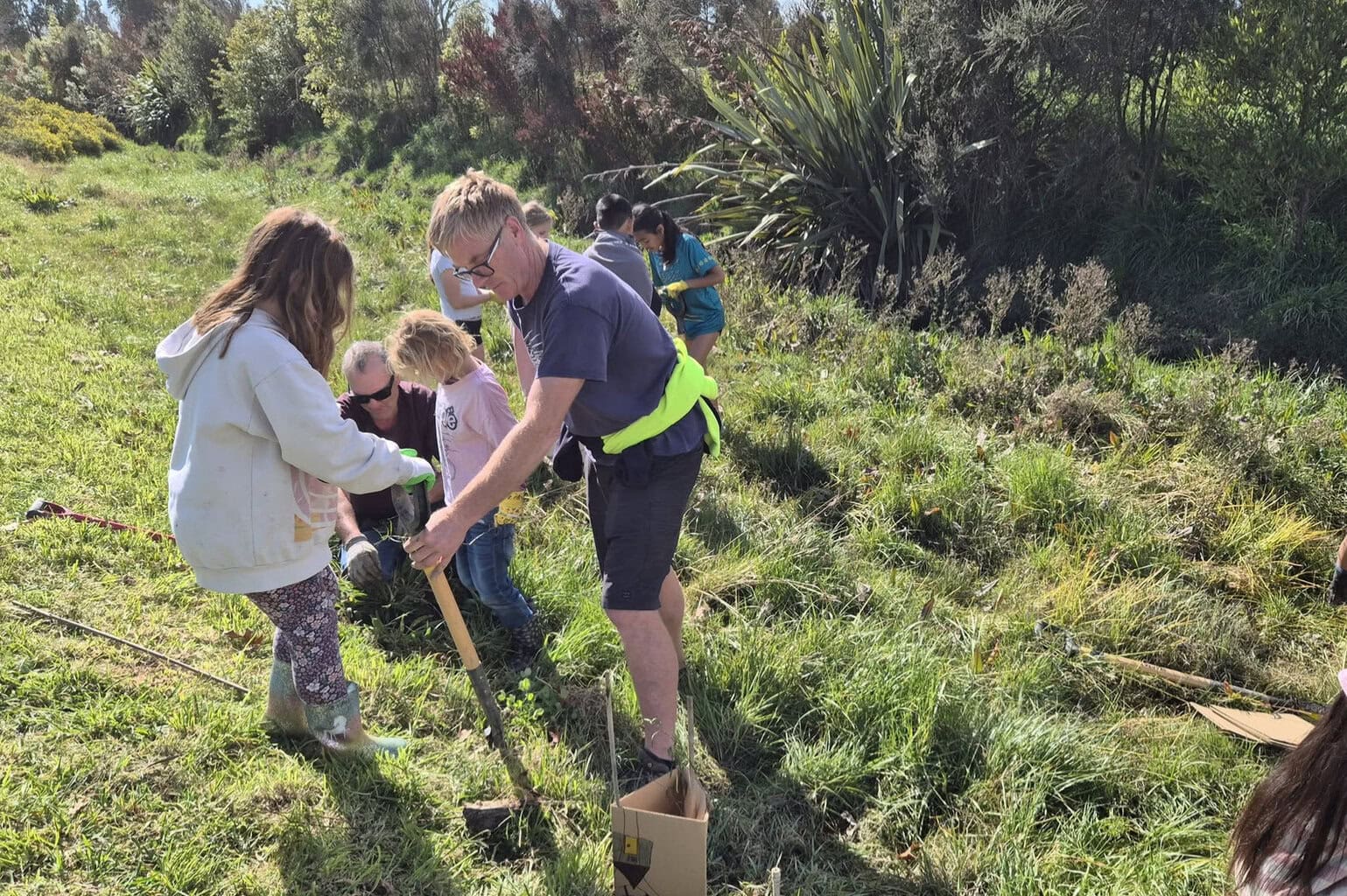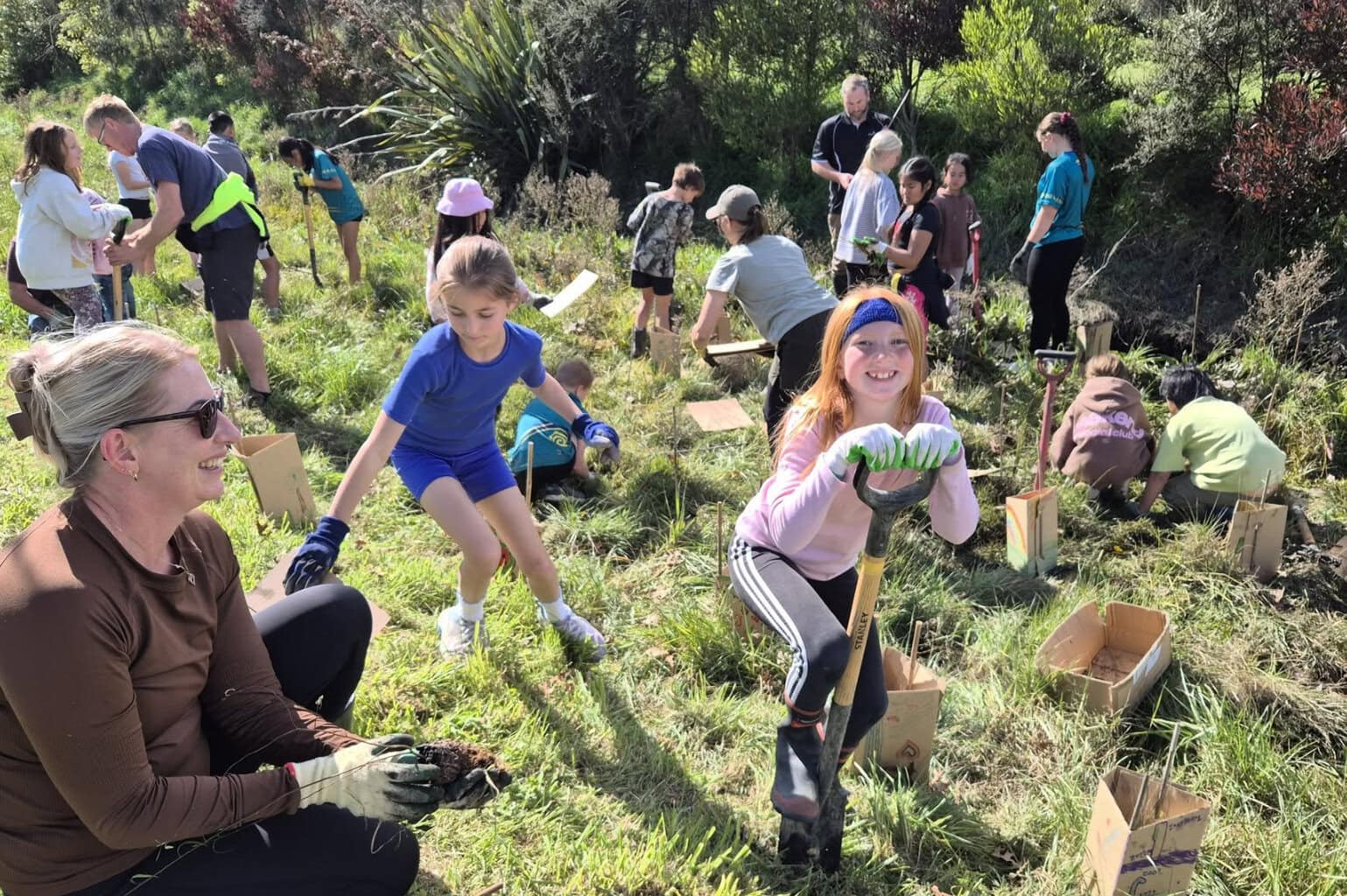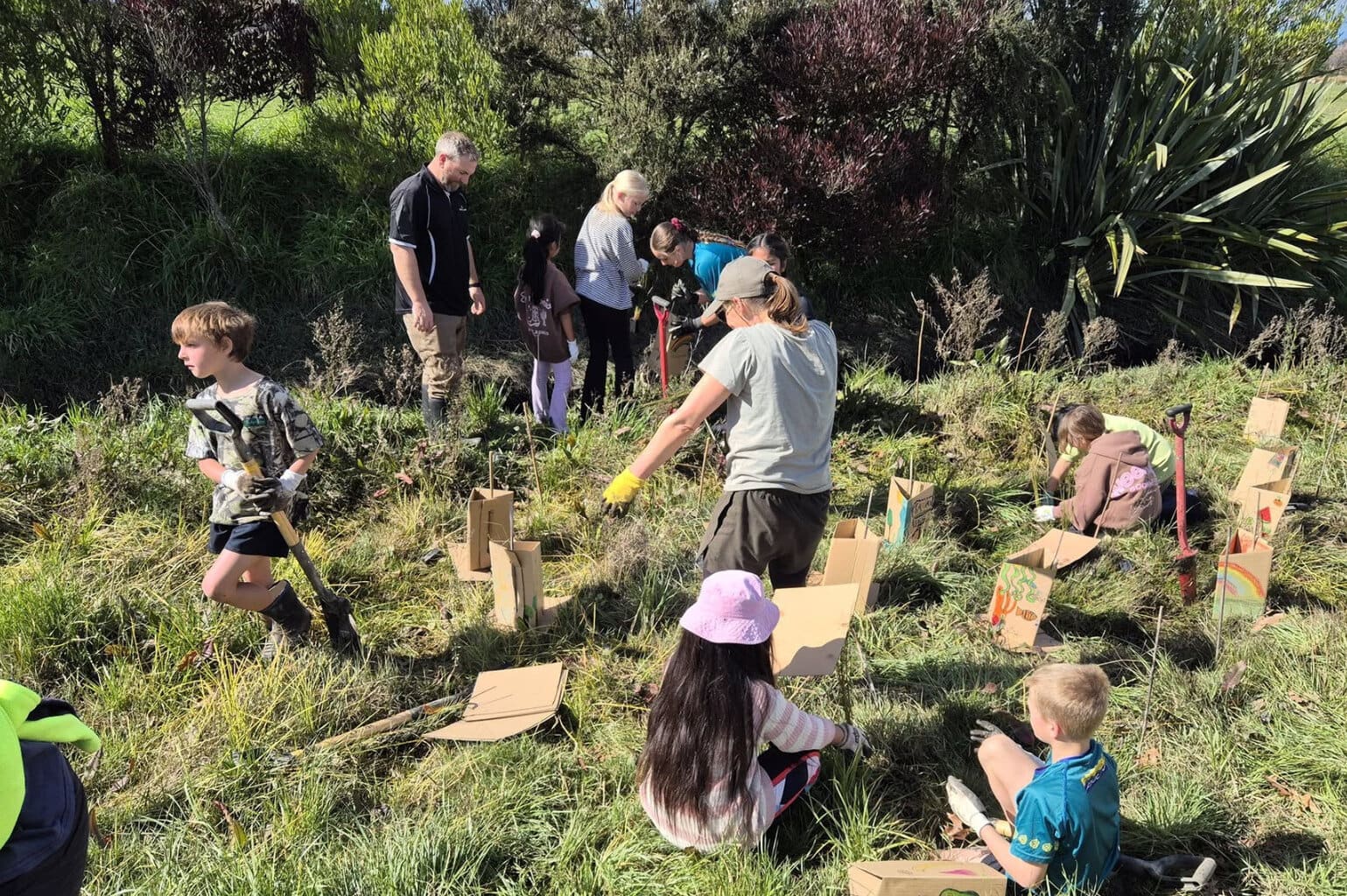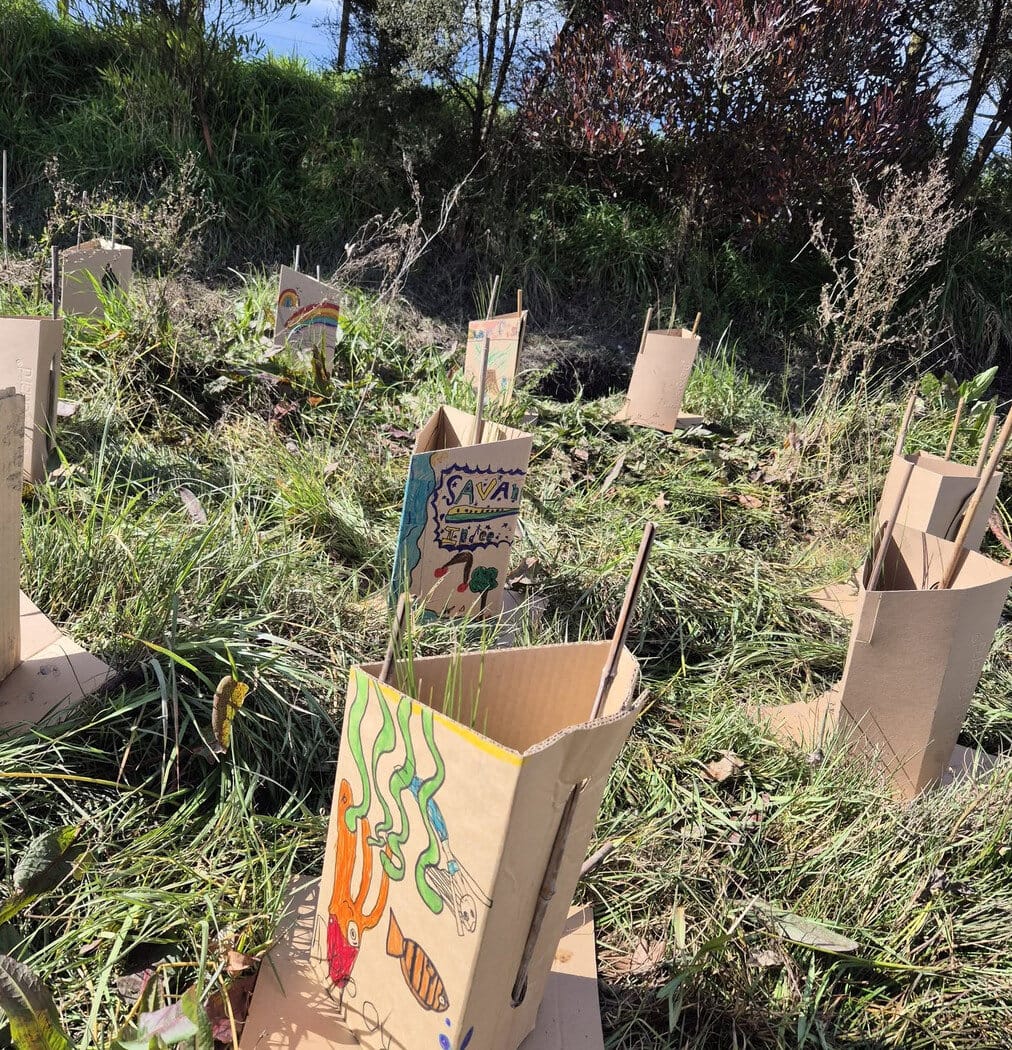
Students from Motueka South School recently swapped the classroom for a local waterway, joining Tasman Bay Guardians to plant an īnanga spawning area in Motueka. Room 4 and members of the school’s Enviro Group got stuck into the work, guided by TBG team member Caz and supported by teachers and parents.
The students had a clear reason for being there: they want to see more whitebait in their local waterway. By planting along its banks, they have taken a practical step towards making that possible.
Īnanga, one of the native fish species whose young are known as whitebait, lay their eggs in dense vegetation at the water’s edge during high king tides. The eggs stay among the plants until the next king tide helps them hatch. Good streamside cover provides the damp, sheltered conditions the eggs need, while in-stream vegetation also offers protection for adult fish (eels, heron and kingfishers love eating īnanga). The plants the students put in the ground will need time to grow, but each one contributes to improving this important habitat.
Planting native species beside a waterway can bring wider benefits too. As the plants establish, their roots help hold the banks together and can reduce sediment build up during floods. Taller plants provide shade, helping keep the water cooler in summer. A healthy mix of streamside plants also creates places for insects and other wildlife to live, supporting biodiversity both in and around the water.
For the students, the day was a chance to put their learning and kaitiakitanga into action. They could see how caring for a small stretch of their local waterway connects to the bigger journey of īnanga, from stream to sea and back again. We hope they’ll enjoy watching the planting grow and seeing how their efforts help shape the site over the coming years.
Ngā mihi nui to Andrea from Tasman District Council for supplying the plants and helping with the planting, and to Deanna, Ben, the teachers and parents who supported the outing. Most of all, thank you to the Motueka South School ākonga for getting their hands in the soil and showing what it looks like to care for their rohe.