This year, two classes from Wakefield School took part in the Whitebait Connection programme, during term 1 and 2, exploring freshwater ecosystems and learning about Aotearoa New Zealand’s native freshwater species, with a special focus on īnanga.
The programme began in the classroom with an interactive presentation introducing students to freshwater habitats, native fish and the challenges facing īnanga. Two hands-on games helped students understand the īnanga lifecycle and explore how changes to habitat, water quality and other environmental pressures can affect fish populations.
Īnanga are now classified as Threatened – Nationally Vulnerable, highlighting the urgent need to identify, protect and restore their spawning habitats. This means they face a high risk of extinction nationally, although they are not yet on the immediate brink of extinction. Because īnanga move between freshwater, estuarine and marine environments throughout their lifecycle, their survival depends on healthy, connected habitats across the entire journey.
Taking learning into the awa
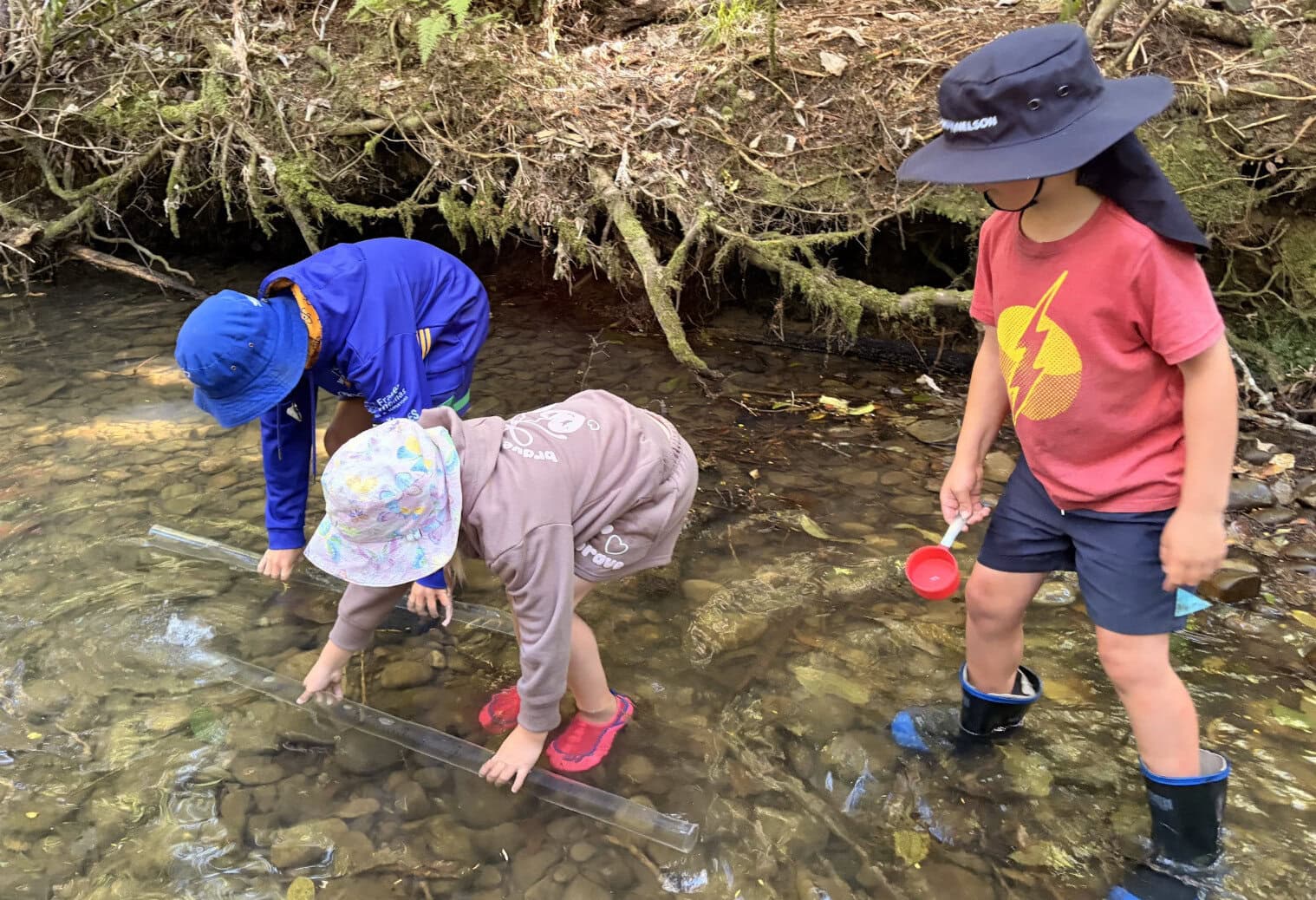
The students then headed outdoors to investigate their local waterways. Their first stream visit was to the Wai-iti River, where they put science and maths into practice by making observations, taking measurements and investigating the life found in and around the water.
It was wonderful to see the students immersed in nature—getting a little wet and muddy while learning through direct experience.
The visit also provided a powerful opportunity to discuss the flooding that affected the area last year. While standing in the river, students could see evidence of how high and wide the water had reached. Looking several metres above their heads helped them visualise the incredible scale and force of the flood in a way that could never be replicated in the classroom.
The second field visit was to Eves Valley Stream. By the end of a dry summer, the stream was no longer flowing. Although it was surrounded by beautiful native forest and abundant birdlife, the students discovered that the stream supported less aquatic life than the more open and flowing Wai-iti River.
Comparing the two sites helped students understand that a healthy-looking landscape does not always mean a healthy freshwater habitat. Water flow, temperature, habitat availability and seasonal conditions all influence what can survive in a stream.
Turning data into knowledge
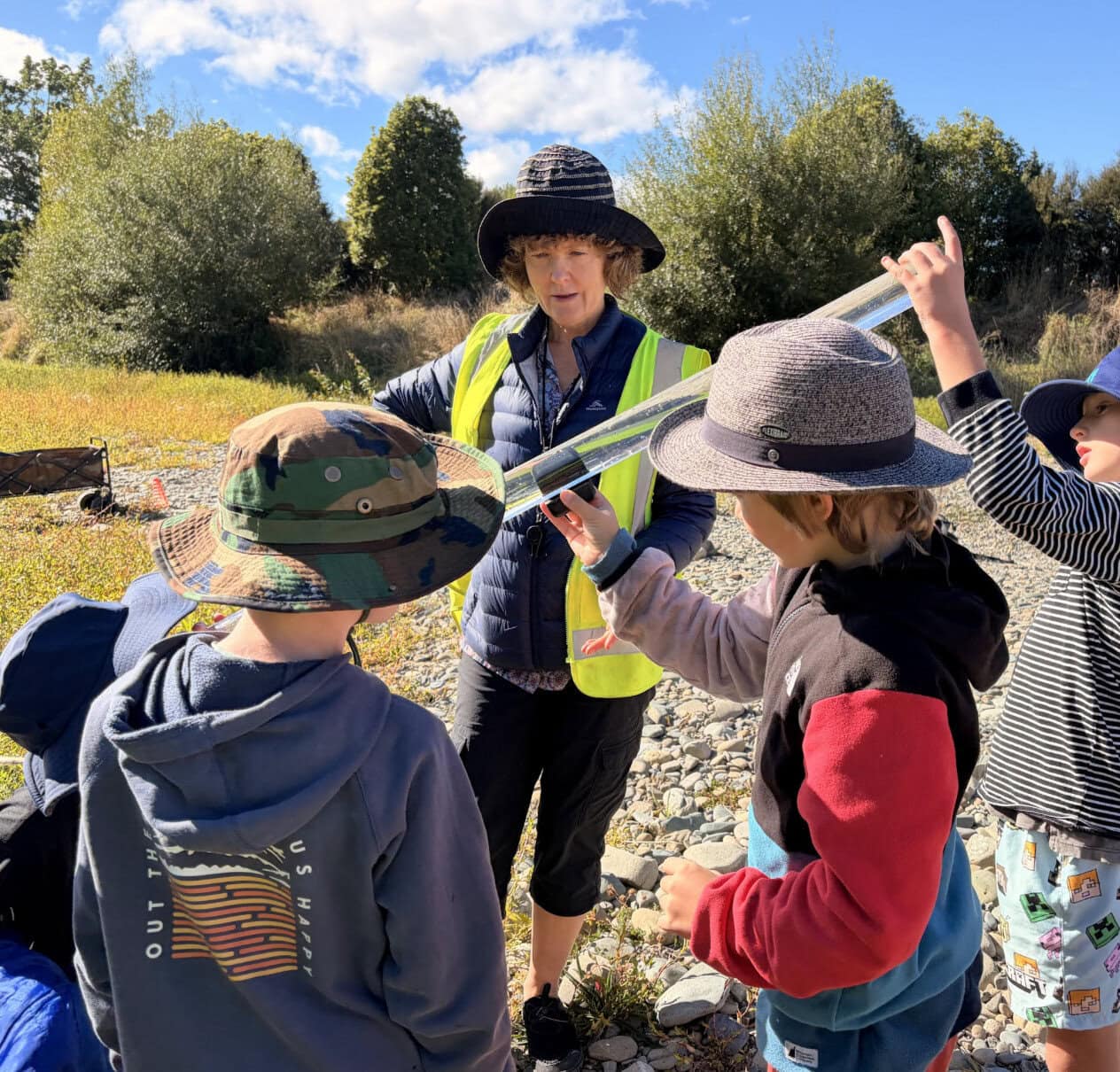
Tasman Bay Guardians later returned to the school to help students interpret the information they had collected. Together, we discussed what the results could tell us about the two waterways and brainstormed ways the students could share their learning with others.
When we returned a few months later, the students had created a fantastic collection of posters featuring facts about freshwater ecosystems, īnanga and the importance of caring for local waterways. The posters were displayed in the school foyer, allowing parents, whānau and other students to learn from their work.
Their teachers then found an even wider audience. The posters were shared through the Wakefield Window, the local community paper delivered throughout the neighbourhood. This meant the students’ message about protecting waterways and īnanga reached homes across the entire Wakefield community.

Putting kaitiakitanga into action
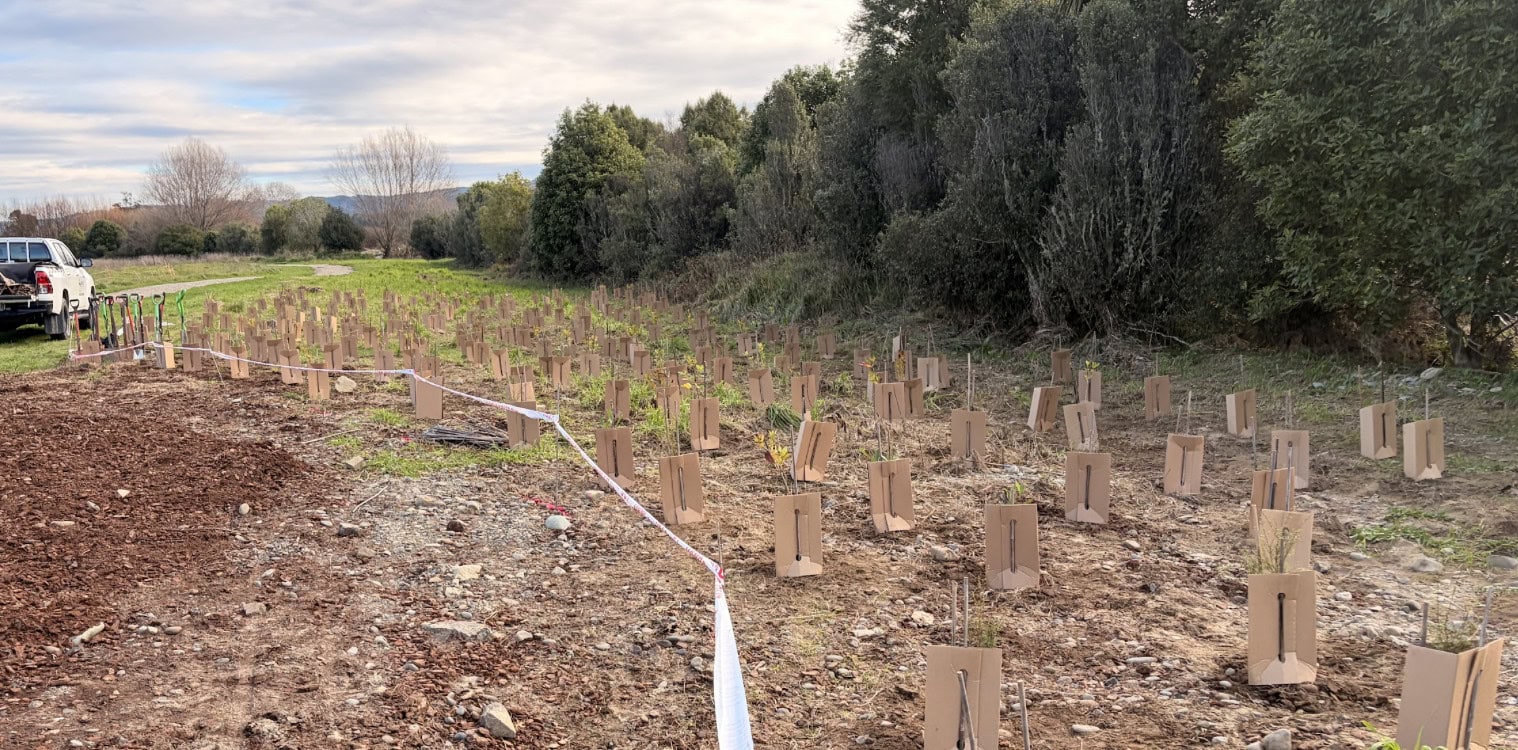
The programme concluded with an opportunity for students to take practical action. Tasman Bay Guardians joined a group of Wakefield School students beside the Wai-iti River, where together we planted 400 native trees.
These plants will help strengthen the river margin, provide shade and habitat, stabilise the banks and support the long-term health of the Wai-iti River.
From classroom presentations and interactive games, to scientific stream investigations, to community communication and restoration, the Wakefield School programme was a fantastic example of students turning learning into meaningful environmental action.