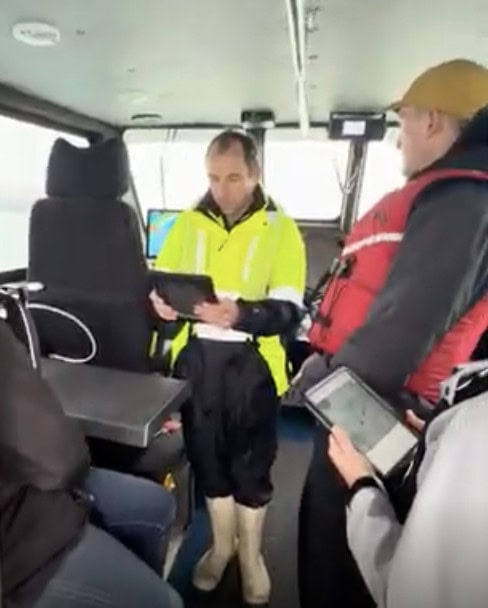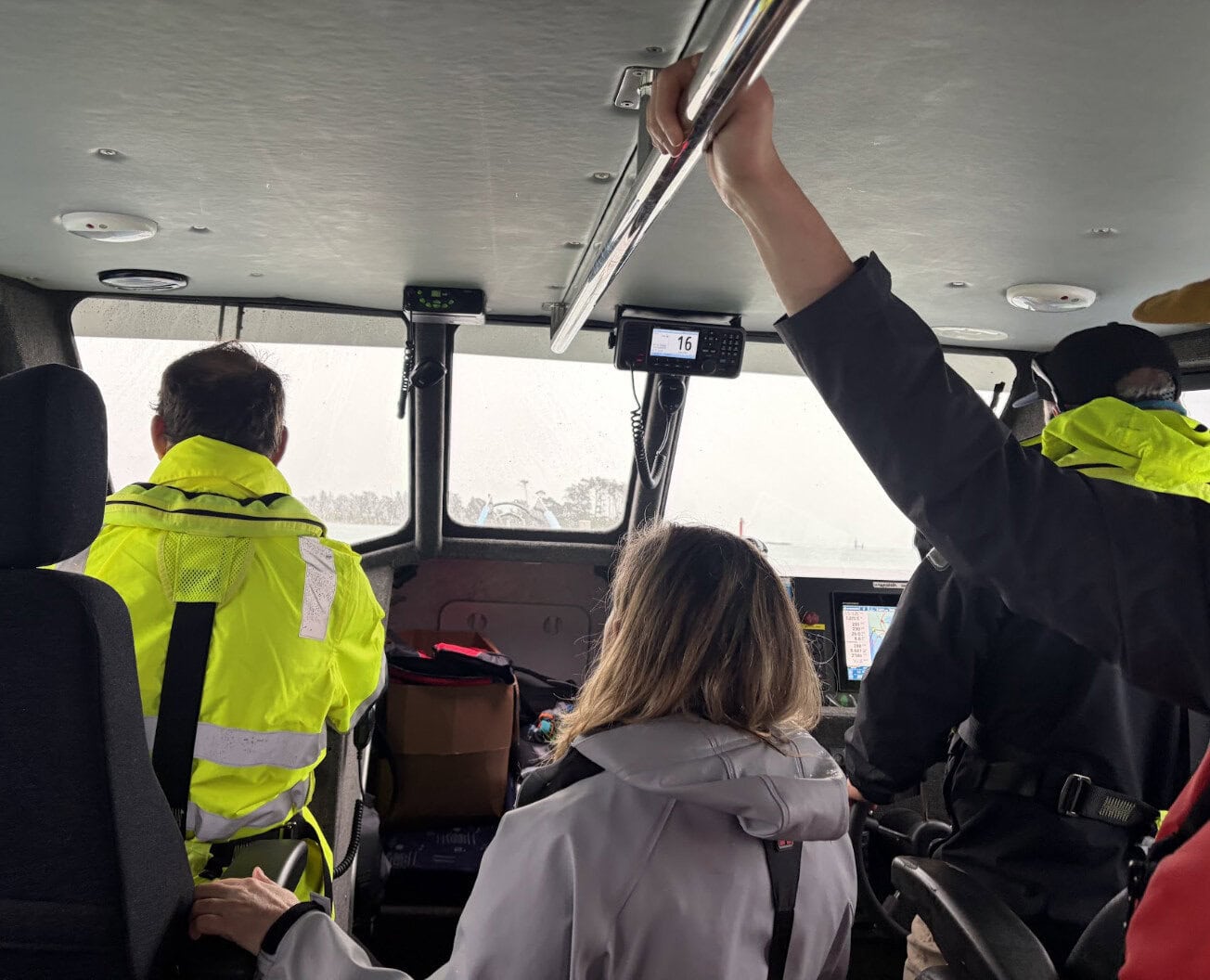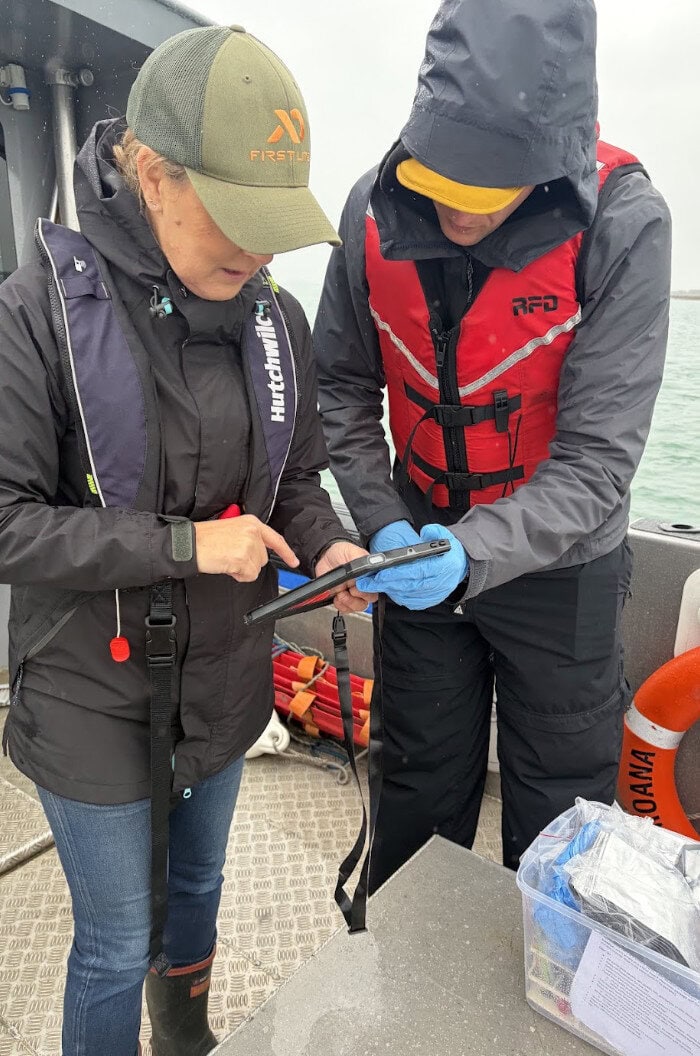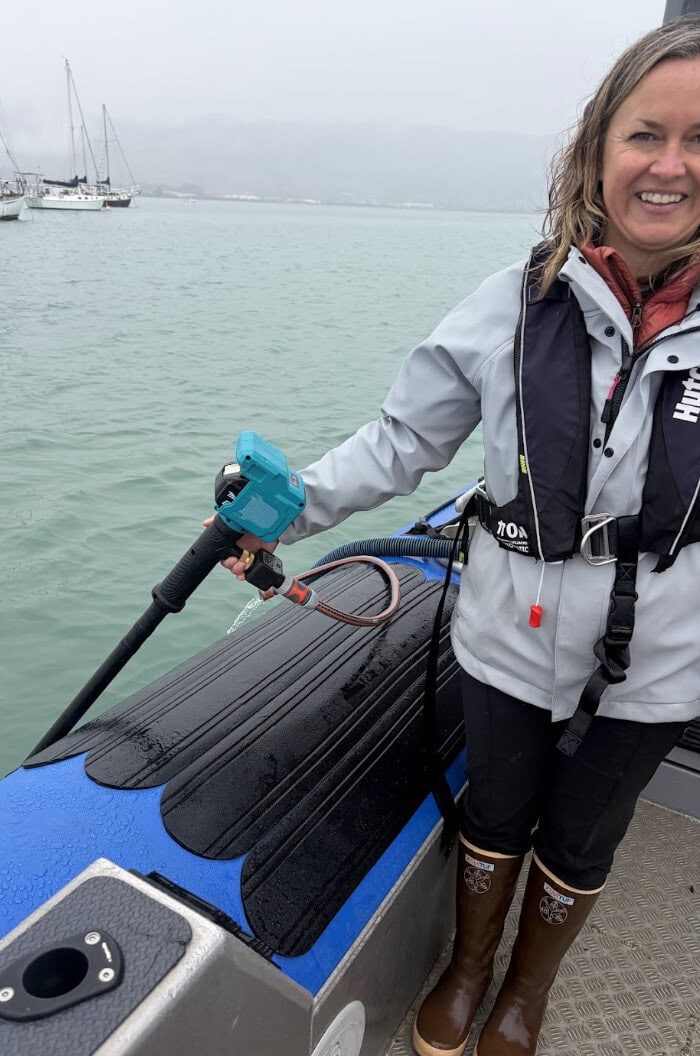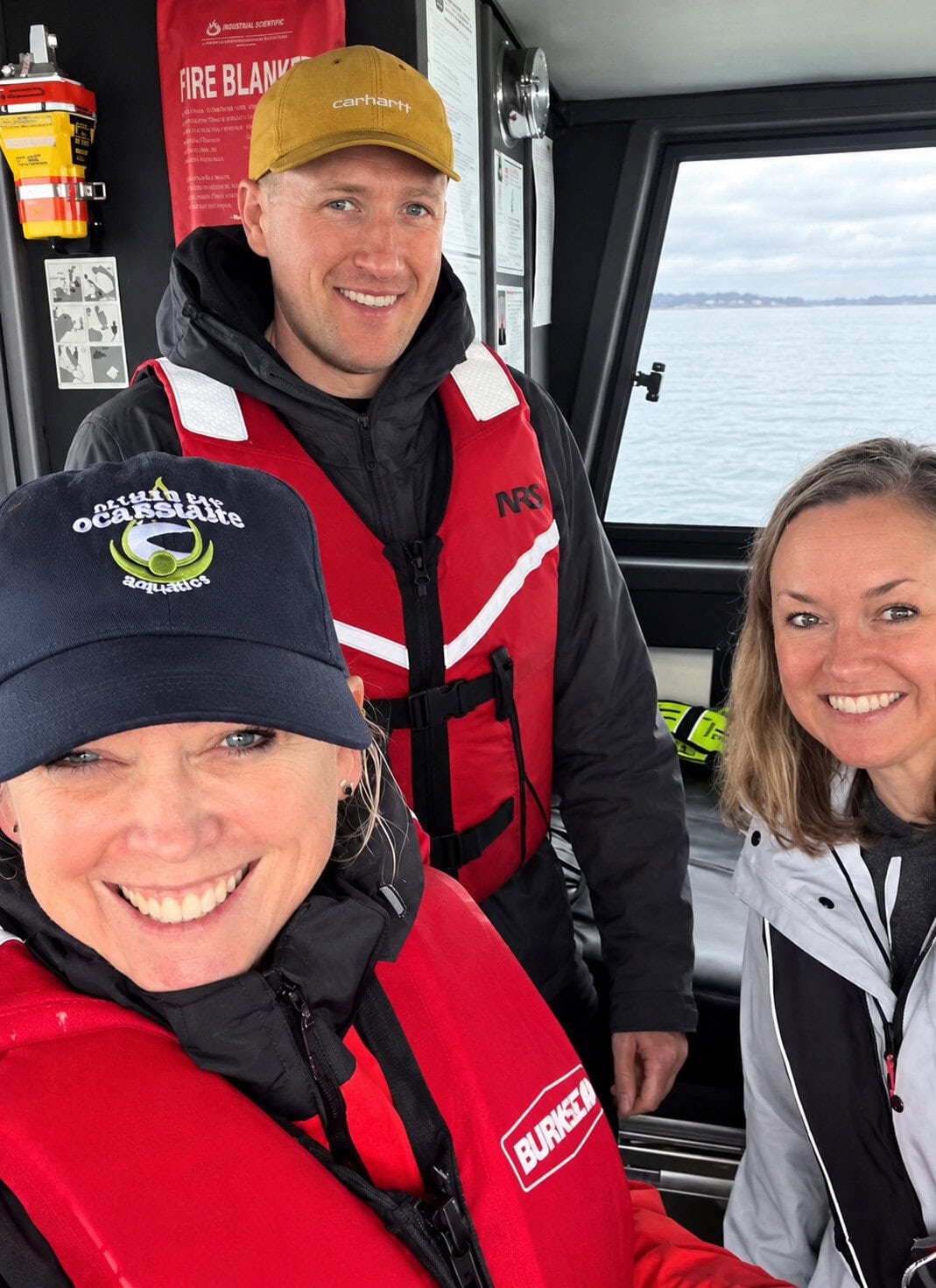
What marine life shares our coastline, including the species we rarely see? In August, Tasman Bay Guardians joined Cawthron Institute, Nelson City Council and the Nelson Harbourmaster for two days of sampling as part of BioProtect, an international project working to improve the protection and restoration of coastal and marine ecosystems.
Nelson is the first region in Aotearoa New Zealand to join BioProtect. The project has demonstration sites in Norway, Iceland, Ireland and Portugal, with partner regions sharing and testing approaches in their own coastal environments. Here in Whakatū Nelson, the aim is to better understand how climate change and other pressures may affect threatened coastal habitats, and to identify places where marine life may have a better chance of persisting as conditions change. Citizen scientists have a part to play in gathering the information needed for that work.
There is a great deal here to understand and protect. Wetlands, seagrass meadows, temperate rocky reefs and shellfish reefs are among the important habitats BioProtect is focusing on in the Nelson region. Closer to home, Waimea Inlet also has remarkable sponge gardens! These communities of sponges and associated marine life that show how much biodiversity can exist in places many of us pass without seeing what lies beneath the water.
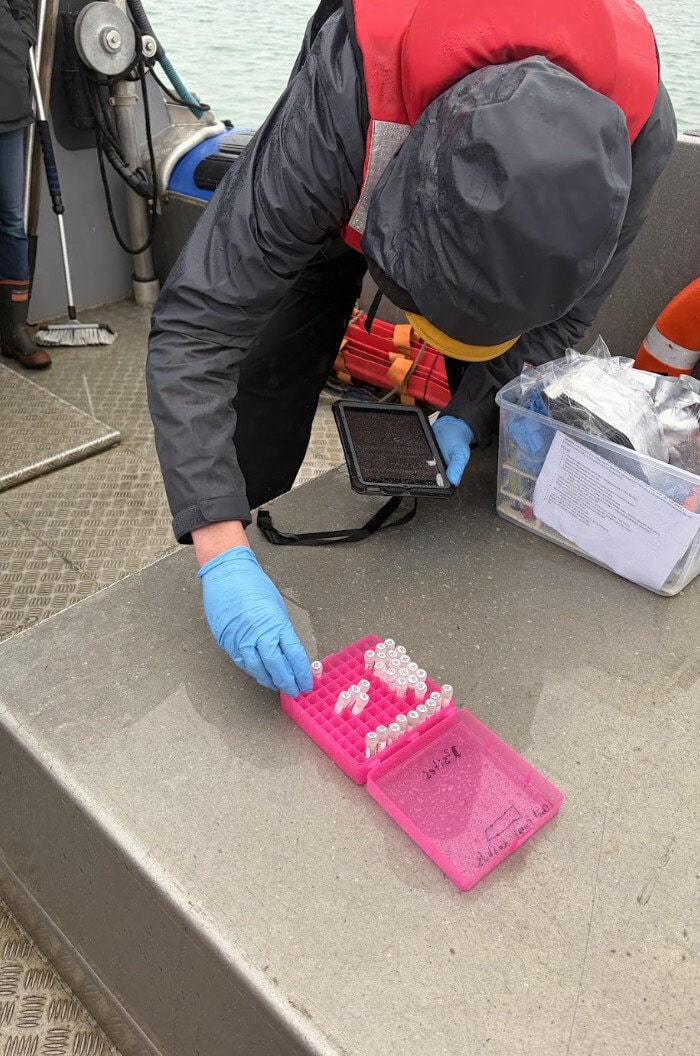
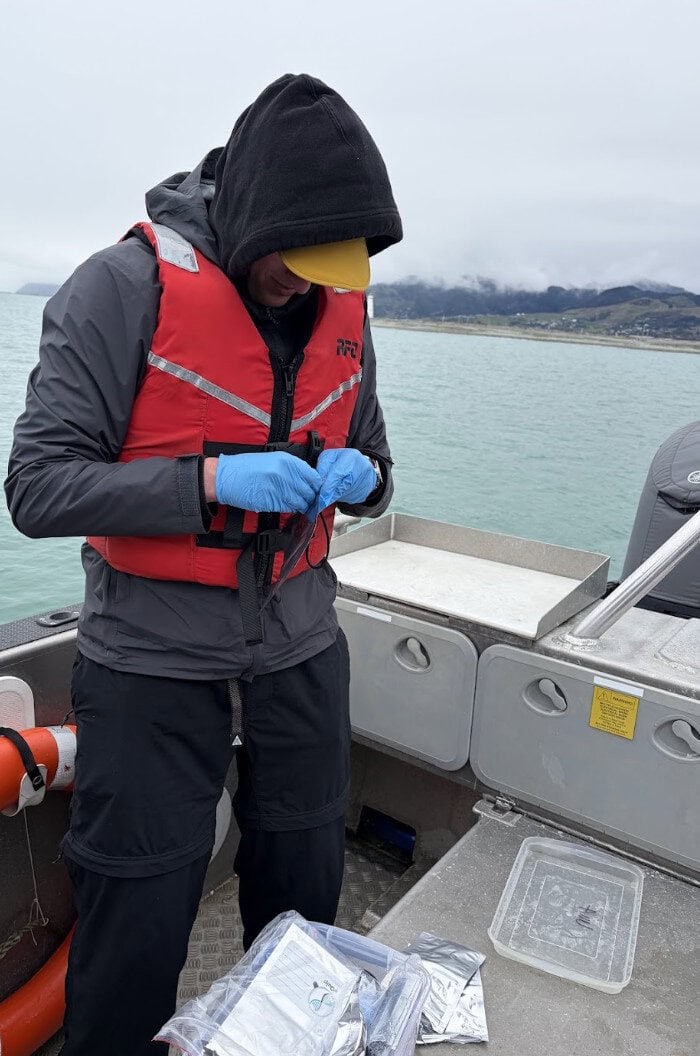
The team’s tool was environmental DNA, or eDNA. Marine creatures leave tiny traces of genetic material in the water as they move, feed and live. By collecting water samples and analysing those traces, scientists can learn which species may be present, including some that are difficult to spot during a traditional survey. The wider survey includes coastal waters around marine reserves and Port Nelson, helping build a picture across places with different habitats and uses.
This round of sampling followed on from the first survey carried out 6 months ago. Over two days, the group worked in two teams. The boat team headed out with the Harbourmaster to collect samples on the water, while the land team began at Nelson Haven and worked through the estuary and up river. Sampling these connected areas reflects something central to TBG’s work:ki uta ki tai, the health of our rivers, estuaries and sea is closely linked.
The samples will help researchers map marine biodiversity and test tools designed to guide conservation decisions. As surveys are repeated and the results build up, they can give us a clearer understanding of which species are present, how coastal habitats connect, and where protection or restoration could make the greatest difference.
We’re grateful to Cawthron Institute, Nelson City Council and the Nelson Harbourmaster for the opportunity to contribute. We look forward to learning what this year’s samples reveal about the life along our coast.