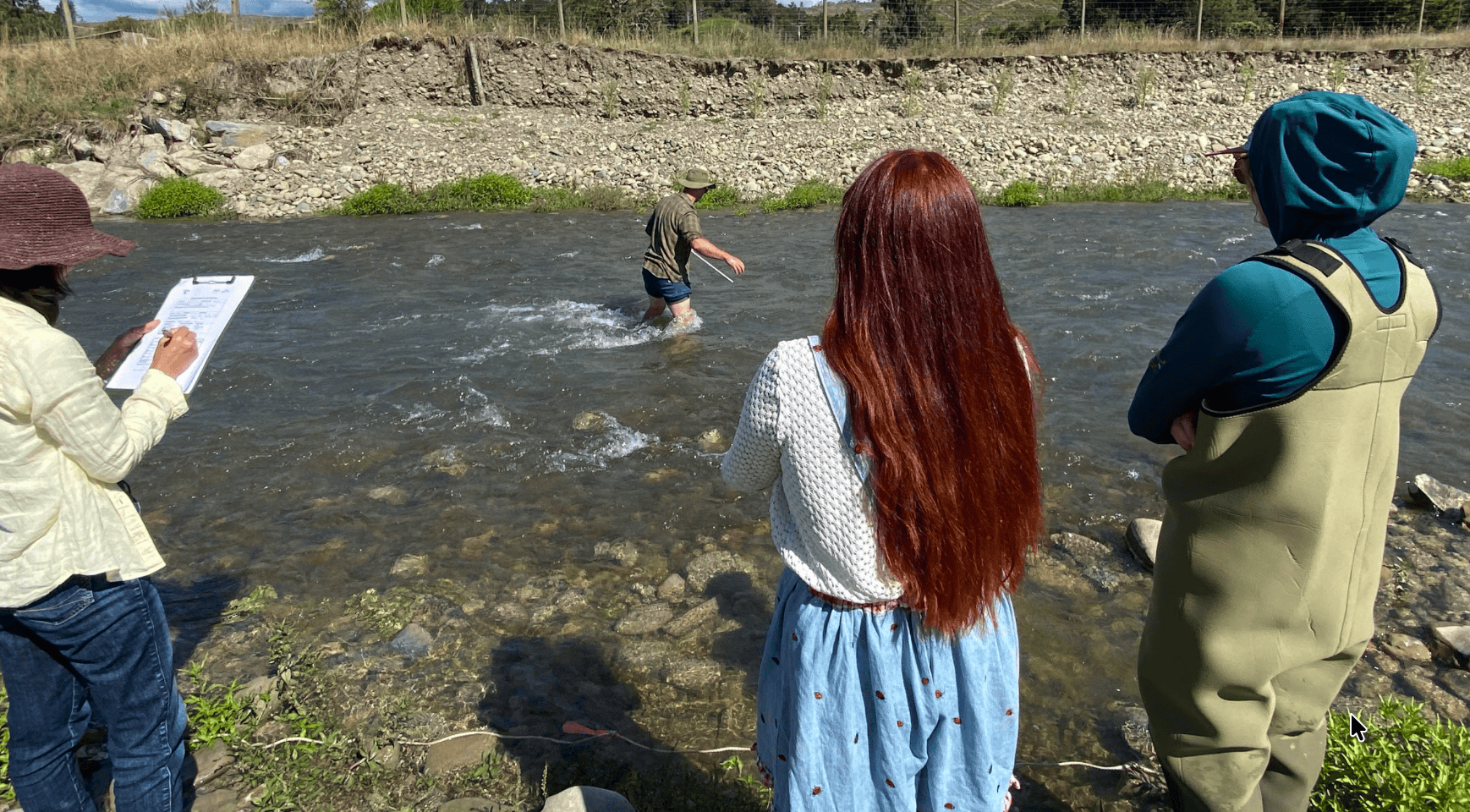
A new community group has recently formed in the Waimea catchment, bringing together a passionate bunch of locals who are keen to learn more about the health of the Wai-iti and how they can monitor it themselves. While it’s still early days, the group is already off to a great start, building knowledge, skills, and connections with their local stream.
To kick things off, Tasman Bay Guardians through funding from the Wai Connection Project, supported the group to run a hands-on workshop focused on SHMAK (Stream Health Monitoring and Assessment Kit) water monitoring. The session began with a presentation introducing the fundamentals of SHMAK and what it can tell us about stream health. This was followed by practical learning at the stream, where participants got their feet wet and had a go at monitoring in real time. It was a fun, relaxed session and a great way for the group to start their monitoring journey together.
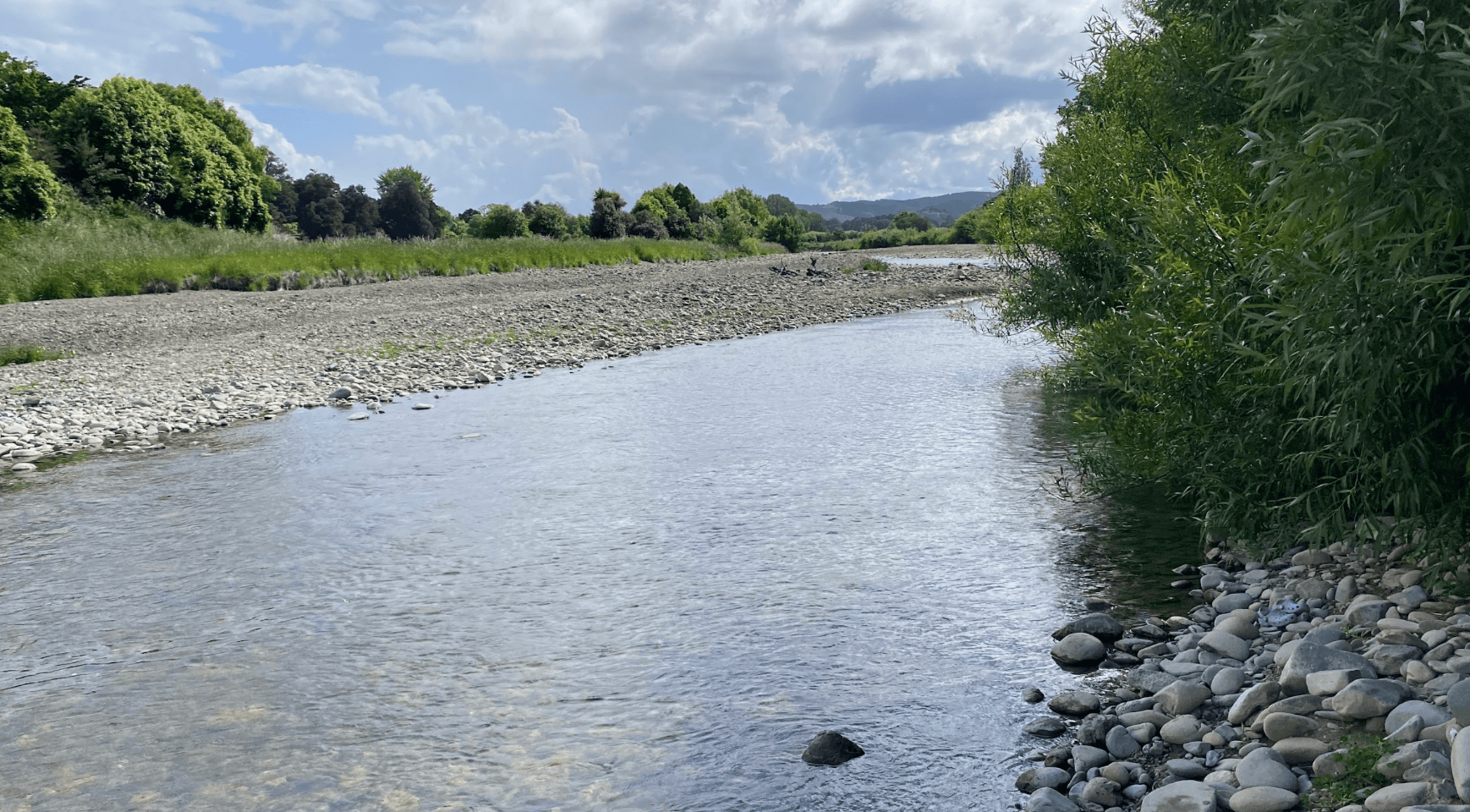
One topic that has sparked particular interest among the group is lamprey. Members have heard that lamprey may spawn in certain areas of the Wai-iti and are keen to learn more about these fascinating and ancient fish. Lamprey have existed for more than 360 million years and, while there are 38 known species worldwide, only one species is found in Aotearoa New Zealand. Lamprey are migratory, moving between freshwater and the ocean to complete their lifecycle, making them an important indicator of river connectivity and health.
With this in mind, the group undertook an environmental DNA (eDNA) test late last year, processed through Wilderlab, with results available on their website. A passive eDNA test was used, where filters were left submerged in the stream for 24 hours. While the results did not detect lamprey DNA, this does not mean lamprey are absent from the Wai-iti. Rather, it indicates that DNA was not picked up during that specific sampling window, something the group is keen to learn more about as their monitoring continues.
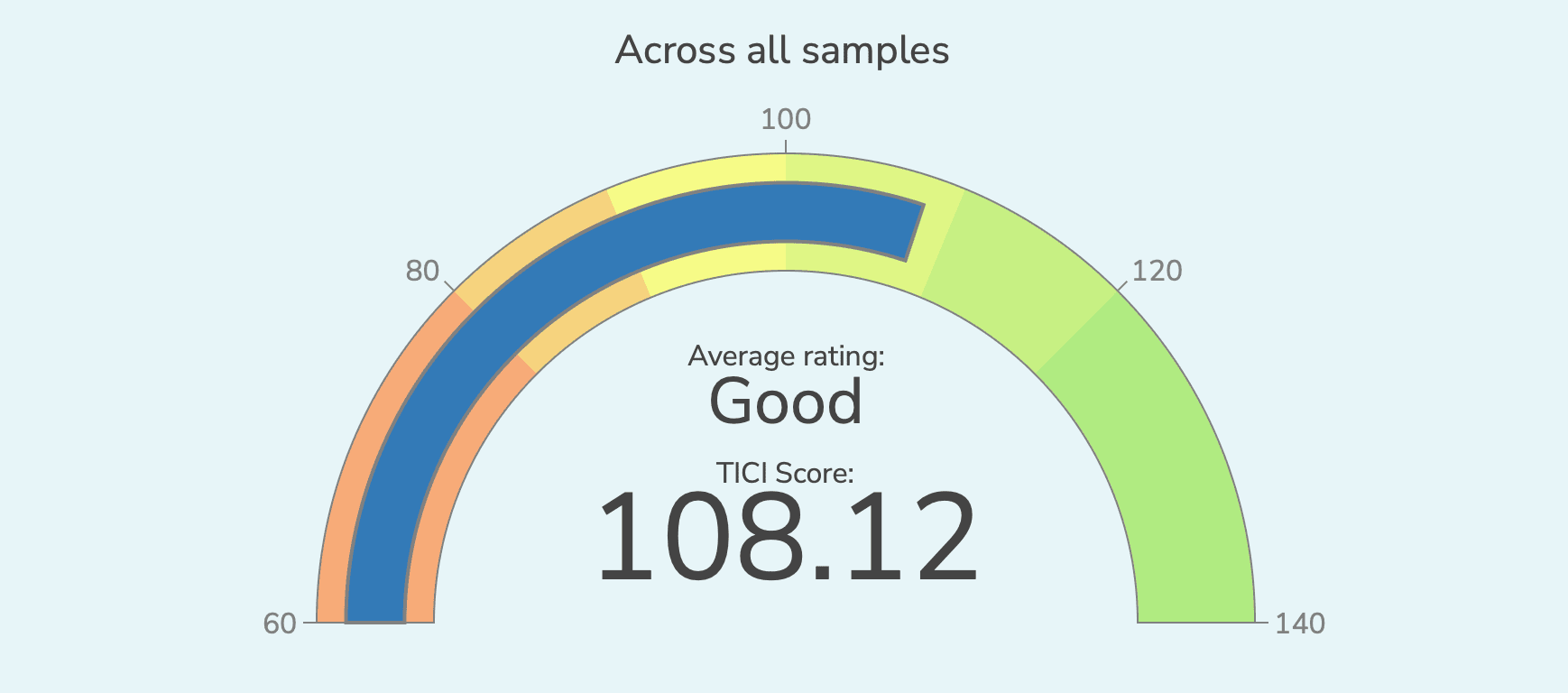
Water temperature is another key focus for the group. To support this, a HOBO temperature data logger has been installed in one stretch of the stream. The logger records water temperature every hour, with data easily downloaded to an app and converted into clear, easy-to-read graphs. This will help the group build a better picture of how temperature changes over time and what that might mean for aquatic life.
The group has now officially begun regular monitoring, with a water monitoring plan in place. A second monitoring site (including both SHMAK monitoring and an additional temperature logger) is scheduled to be installed later this month.
The Wai-iti group is keen to welcome new members and, once enough data has been collected, plans to share their results with the wider community. It’s an exciting start for a locally led project that puts learning, curiosity, and care for the Wai-iti at its heart.